
 +86 14769960951
Aqua Feed Production Line
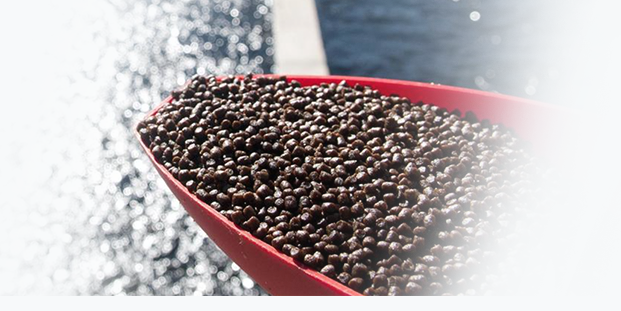
This aqua feed production line has a production capacity ranging from 0.2 to 40 T/H. It can be configured with either an extrusion or pelletizing process to produce floating feed, sinking feed, and slow-sinking feed in various formulations, thereby meeting the nutritional needs of fish, shrimp, crabs, and other aquatic species. This page will focus on showcasing the configurations of different production capacity options, their applicable scenarios, and selection recommendations.
One-Stop Aquafeed Production Solutions
We offer one-stop solutions for aqua feed production line, including system recommendations, production capacity selection, customized process flows, tailored equipment, and more. For clients requiring rapid production startup, we provide turnkey project solutions.
For various types of feed production, we offer single screw extruder machine, twin screw extrusion machine, and feed pellet machine, along with a wide range of auxiliary systems. These machines are not only suitable for producing aquaculture feed, but also for pet food, livestock feed, and specialty animal feed.
Aquaculture feed comes in various types, formulations, and pellet sizes. This production line is equipped with high-efficiency crushing and mixing systems. Fine crushing and uniform mixing enhance pellet formation. Our feed processing equipment can adapt to different feed formulations, producing nutritionally balanced, water-resistant, palatable, and easily digestible aquaculture feed or pet food. Furthermore, the pellet drying, cooling, and packaging systems are all designed for automation, significantly improving production efficiency.
Adapted to different production scales and budget requirements, we offer basic, entry-level, standard, and high-end configurations, as well as options with varying levels of automation. For large-scale aqua feed plants and integrated feed factories, the automated solutions provide a higher return on investment.
Process Flow Options
We offer a variety of process flow options to meet diverse production needs.
Crushing
mixing
extrusion
drying
spraying
cooling
screening
packing
Aqua Feed Pellet Line Production Capacity Breakdown
Below are the basic production capacity breakdown and process flowchart for this production solution. They are designed to meet the production needs of fish farms, aquafeed plants, and feed suppliers. We offer customized process flows and equipment solutions tailored to individual customer requirements. If you would like more detailed information about this production solution, please click the button below.
0.5-1.0 T/H
aqua Feed Production Line
The production line can be configured for various production processes. The feed produced is highly water-resistant, nutritionally balanced, and easily digestible and absorbable. The system offers high-efficiency, low-energy production, ensuring a stable output of high-quality aquafeed.
Aqua Feed Production Line Capacity Solutions
Below are common capacity options for this solution within the range of 0.2–40T/H. We can also customize other solutions to meet higher capacity requirements. These options are suitable for various production scales and application scenarios. Specialized equipment can be customized for each solution. Please feel free to contact us for more information.
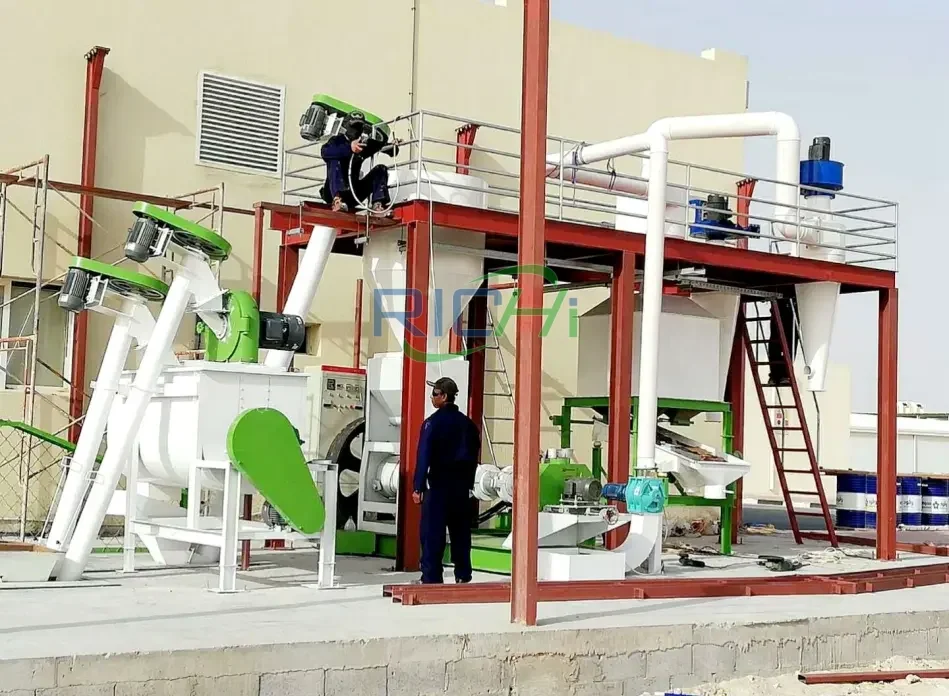
0.2-0.4 T/H Production Line
As a small-scale fish feed processing line, this solution is easy to operate, energy-efficient, and requires a low initial investment. It is particularly suitable for small-scale fish farms, shrimp ponds, and similar operations to produce aquafeed for on-site use. Due to its relatively low production capacity, it is typically configured with an extrusion process.
Its feed products include floating and slow-sinking feeds that meet the nutritional needs of freshwater fish such as tilapia, crucian carp, and carp, as well as those of aquaculture fry. The extrusion process allows for a variety of raw material formulations, enabling the company to meet its own ingredient needs.
Small scale
Floating feed
Extrusion Process
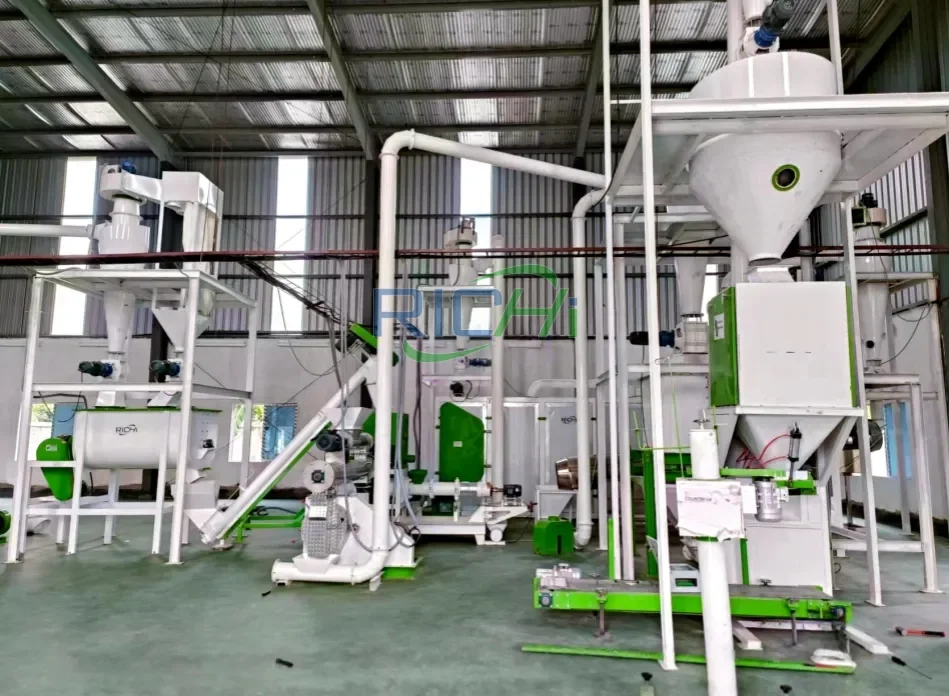
0.5-1.0 T/H Production Line
This solution is also a small-scale floating fish feed production line capable of continuous production. As such, it is suitable for small- and medium-sized aquaculture operators. This solution is equipped with extruder equipment, including single-screw and twin-screw extruders.
It offers greater flexibility in feed formulation and can produce feed pellets of varying densities, including floating, sinking, and slow-sinking feeds. This feed product is suitable for feeding tilapia, catfish, other freshwater fish, and shrimp.
Small scale
Floating/sinking feed
Extrusion Process
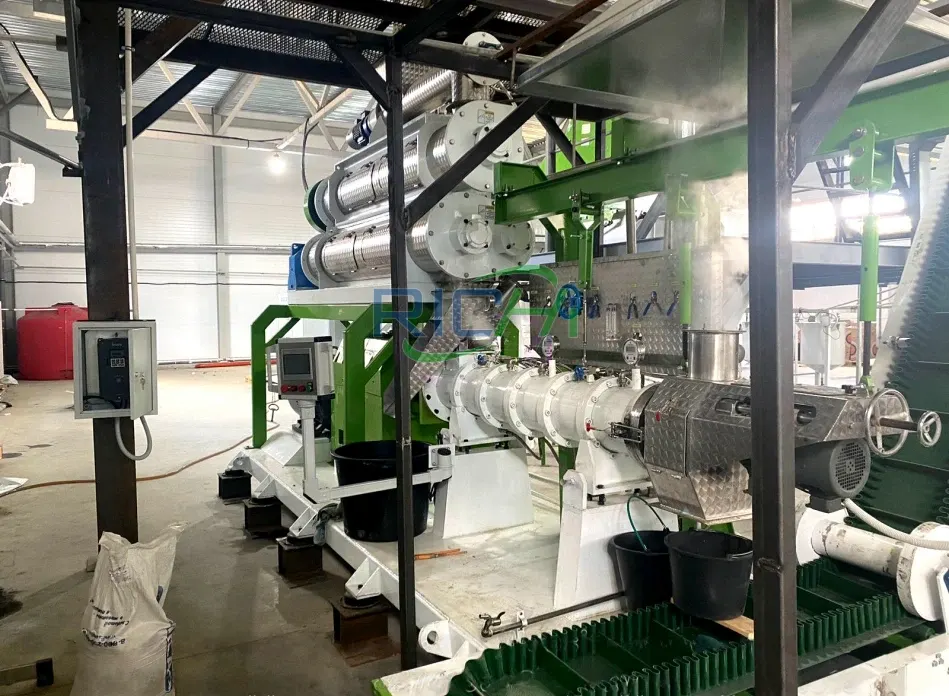
1.5-2.0 T/H Production Line
This is a production solution designed for medium-scale operations, suitable for large-scale aquaculture farms, start-up aqua feed plant, and similar operations. This solution can be configured with extruders, fish feed pellet making machine, or shrimp feed pellet machine, among other options.
It is suitable for a wider range of aquaculture feeds, including floating feeds and premium sinking feeds. The system typically produces feeds in a variety of sizes to meet the feeding habits and nutritional needs of different aquatic species, such as catfish, trout, shrimp, and freshwater crabs.
Medium scale
Floating/sinking feed
Extrusion/pelletizing Process
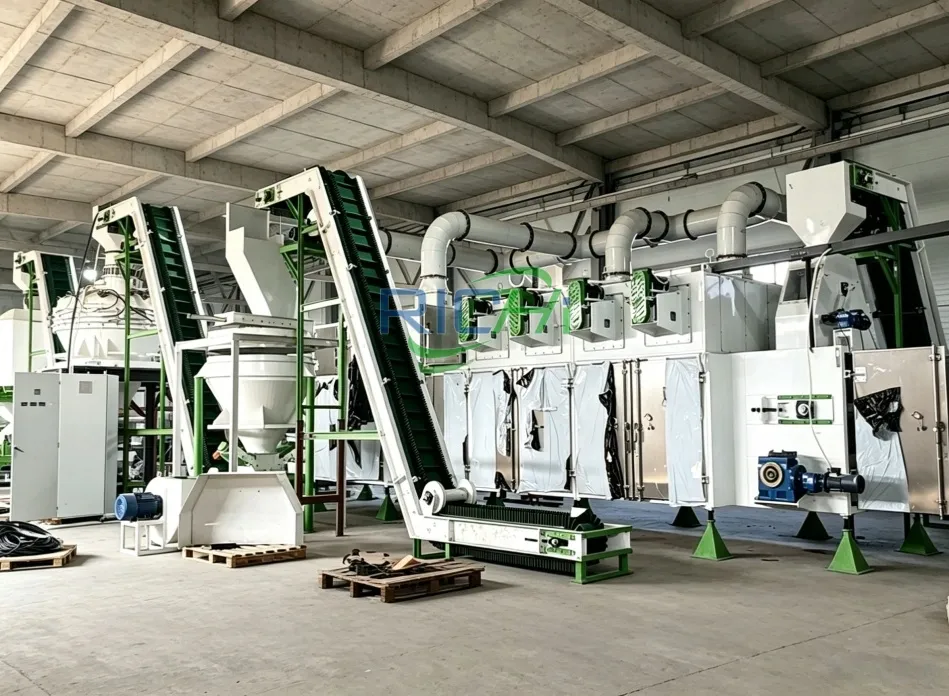
3.0-4.0 T/H Production Line
As a solution for large-scale aquafeed plant, this production line features a certain level of automation. It is equipped with a highly automated control system. Typically, it also includes twin screw extruders or pellet mills equipped with three stage conditioners for the production of high-end aquatic feed.
It produces a diverse range of feed types, particularly suitable for marine fish, shrimp, crabs, and other high-value fish species. For shrimp feed plant, pellet machines are typically used. Twin-screw extruders can be used for the production of high-quality aquafeed.
Medium scale
Floating/sinking feed
Extrusion/pelletizing Process
5.0-6.0 T/H Production Line
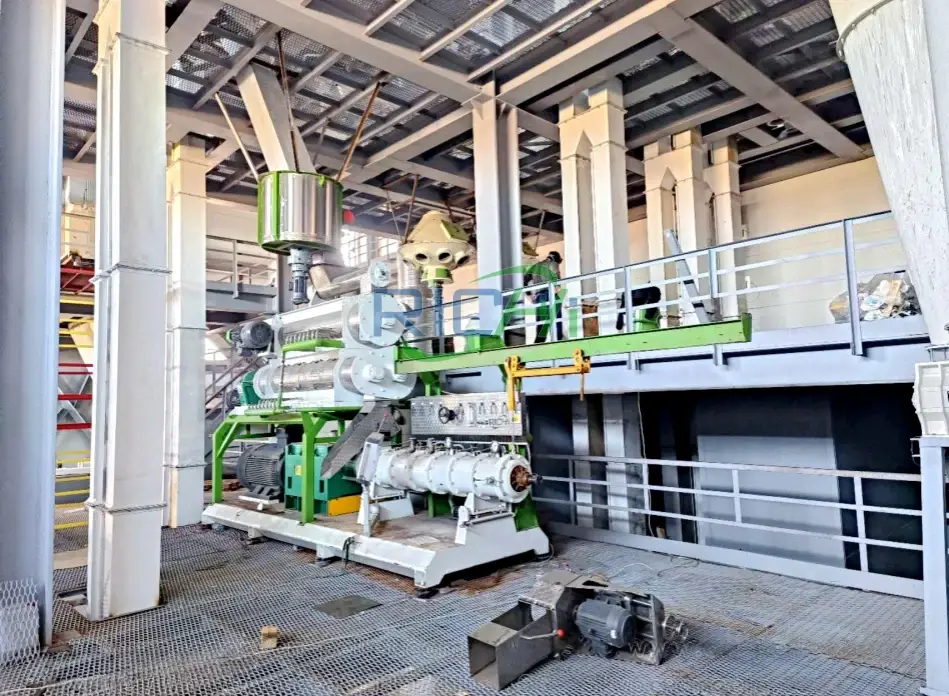
This is the most common integrated aquafeed production solution, typically offering customized or turnkey services. It enables 24-hour continuous production. The installation of automated batching and integrated control systems helps reduce labor costs.
This solution features twin-screw extruders capable of producing aquafeed with various formulations, including those with high protein and high fat content. Its scientifically designed process enables the production of high-quality, highly water-resistant floating and sinking feeds. It is an aquatic feed production line that offers a high return on investment.
Medium scale
Floating/sinking feed
Extrusion/pelletizing Process
7.0-8.0 T/H Production Line
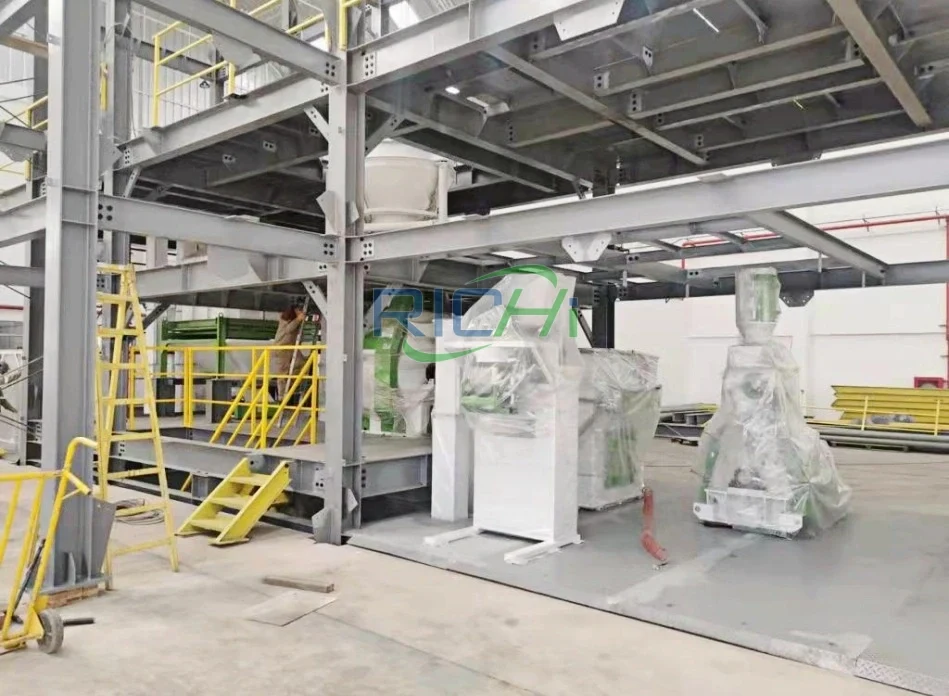
As a high-capacity solution, this production line is commonly used by large-scale aquafeed enterprises and feed manufacturers with export requirements. It is typically equipped with high-capacity extruders and a fully automated production system, enabling rapid switching between multiple formulations.
This production line offers superior overall production capacity, ensuring a sustained high output. It produces a diverse range of feed types, including various high-end aquafeeds. In particular, it meets the feeding requirements for marine fish, shrimp, and crabs.
large scale
Floating/sinking feed
Extrusion/pelletizing Process
Above 10.0 T/H Production Line
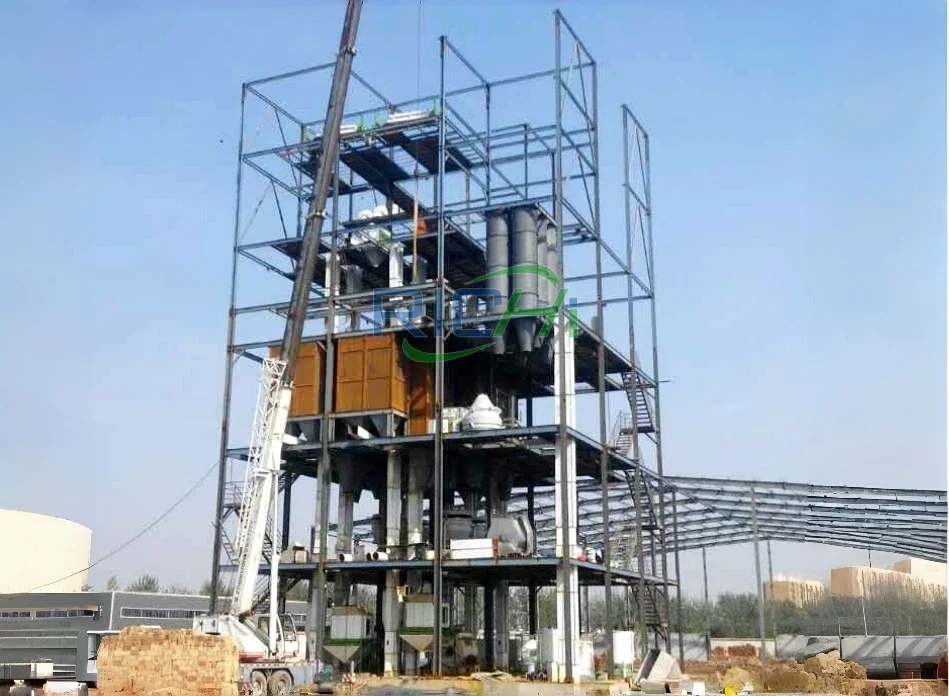
This solution is suitable for large-scale feed groups as well as regional feed production projects. We can provide turnkey solutions to build smart factories. These facilities typically feature multiple parallel production lines equipped with multiple sets of extruders or pelletizers, enabling the simultaneous production of various feed types.
Overall, this solution offers low unit production costs and is well-suited for supplying feed products to regional aquaculture operations, particularly high-density aquaculture. It can cover the full range of aquaculture feed categories, including freshwater and marine feeds, as well as high-end specialty aquaculture feeds.
large scale
Floating/sinking feed
Extrusion/pelletizing Process
aqua feed pellet line Process Flow
The following outlines the aqua feed manufacturing process. The process has been scientifically designed and equipped with highly efficient, energy-saving auxiliary equipment. This equipment handles the entire production process, from raw material processing and mixing to the packaging of the finished feed. The specific process divisions for different production capacity scales will vary; please feel free to contact us for more information.
01
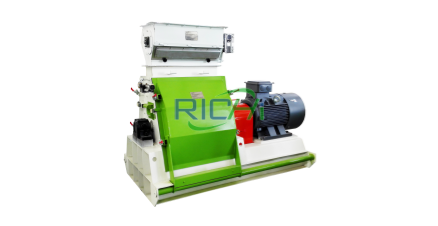
Raw Material Crushing
This stage involves crushing materials to make them more suitable for pelletizing or extrusion. For example, corn, wheat, rice, and meat-and-bone meal typically need to be ground to a fineness of approximately 60–100 mesh. This stage usually employs a hammer mill or an ultra fine powder grinding machine.

02
Raw Material mixing
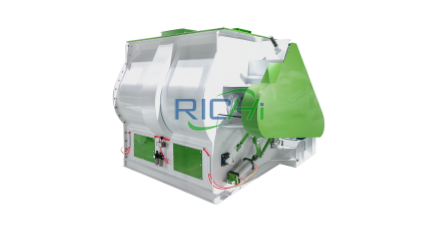
This section can be equipped with a twin-shaft paddle mixer to blend various powdered materials, or with a liquid dosing system to add feed additives and other nutrients. The blending process is controlled by an automated system, ensuring rapid and uniform mixing.

03
feed pellet forming
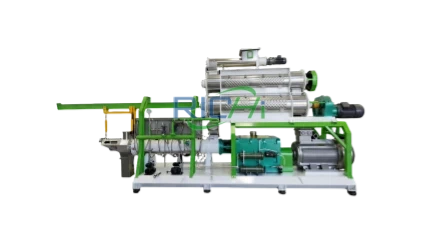
There are two production processes, including extrusion and pelletizing. The equipment we offer includes floating fish feed extruder machine, sinking fish feed extruder machine, as well as pellet machines. They can be fitted with differently sized dies to produce pellets of various sizes.

04
feed pellet drying
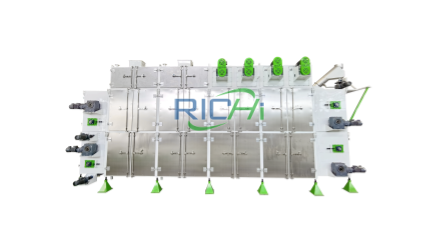
To meet feed drying requirements, we offer mesh belt dryer machine. They achieve uniform and efficient drying through a gentle hot-air circulation process. In this process stage, the moisture content of aquatic feed is reduced to about 2–10%. This helps extend the feed’s shelf life.

05
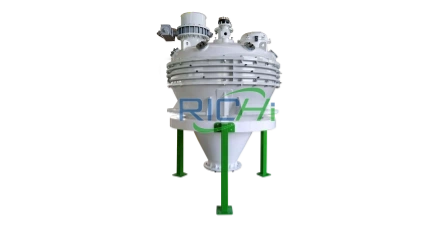
feed pellet spraying
This stage applies liquid nutrients or attractants evenly to the surface of feed pellets, thereby enhancing the feed’s nutritional content and palatability. We offer a variety of oil spraying machines, including paddle-type, drum-type, simple-type, and vacuum sprayers.

06
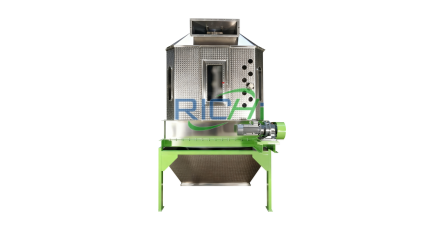
feed pellet cooling
Feed pellets dried with hot air reach high temperatures, which is not conducive to fat solidification. An octagonal counter-current cooler is installed for this stage. It features a high level of automation, which helps prevent pellet loss. The cooled pellets have a more stable structure.

07
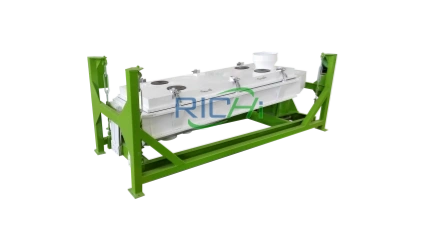
feed pellet screening
This process can sort feed into 2–3 different specifications while simultaneously removing powdered material, thereby ensuring the quality of the feed pellets. The vibrating screen can be integrated with the cooler to save floor space and improve production efficiency.

08
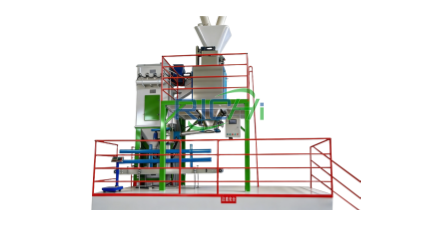
feed pellet packing
The section is equipped with a fully automatic packaging scale that supports gravity, belt, or screw feeding. Sealing methods include seam sealing, heat sealing, or a combination of both. Its high level of automation further enhances production efficiency and reduces labor costs.

The above illustrates a typical equipment configuration for this aqua feed production line. To meet a wider range of production needs, we have designed equipment tailored to different production capacities and requirements. Please feel free to contact us at any time to discuss your production solutions.
Operational Videos
of Aqua Feed production Lines
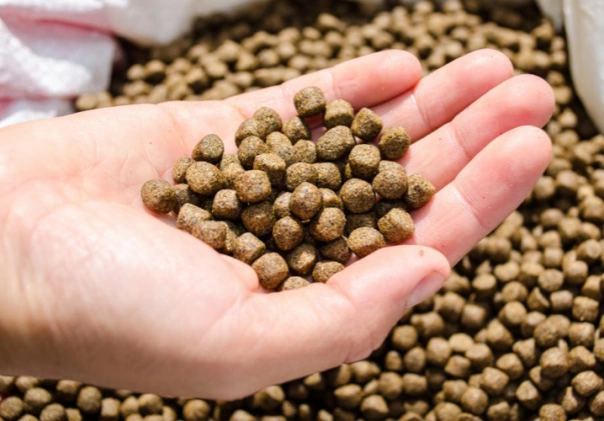
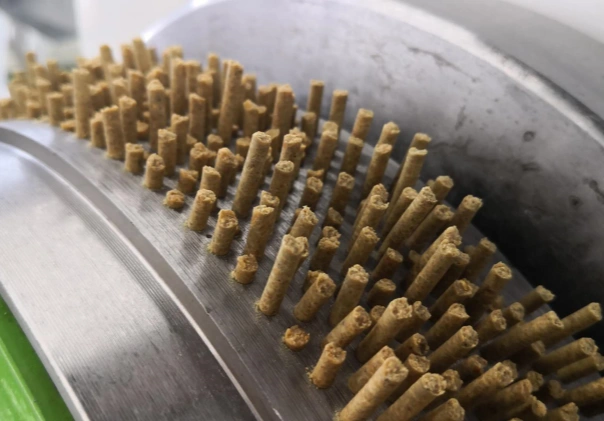
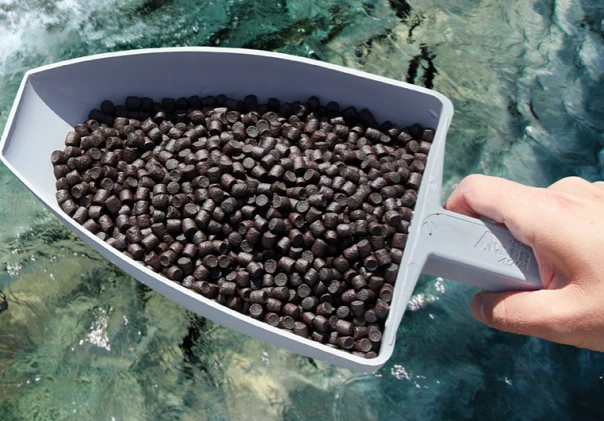
The following demonstrates the actual operation of aquafeed solutions with different production capacities. These include fish feed production lines and shrimp feed plant. Depending on the customer’s specific needs and production scale, different equipment configurations are provided. Click play to learn more.

2-3 T/H Fish Feed Production Line
2 T/H Shrimp Feed Plant
5-6 T/H Aqua Feed Pellet Line
Recommended Production Capacities for Different Aquafeed Plants
Drawing on RICHI’s many years of experience, we can provide tailored production solutions for aquatic feed pellet plants and aquaculture operators of all sizes. Taking into account the specific circumstances of our clients at different stages, we have compiled the following recommendations for production capacity. You may choose from the options below or contact us at any time for more details.
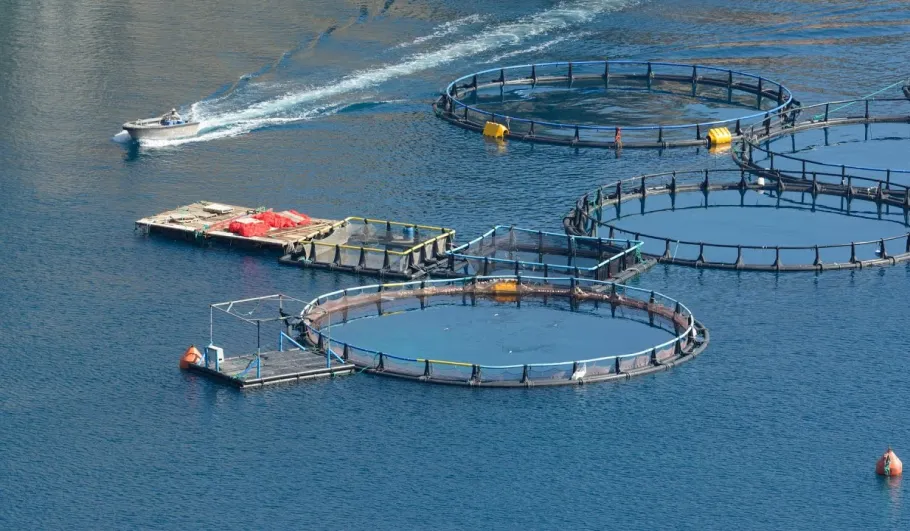
Aquaculture Farms
For large-scale aquaculture farms, common production capacity ranges from 0.2 to 1 T/H. This capacity allows for self-sufficient feed supply while reducing farming costs and improving feed freshness. The aqua feed production line is configured with a basic production process to produce feed for fish, shrimp, crabs, and other aquatic species.
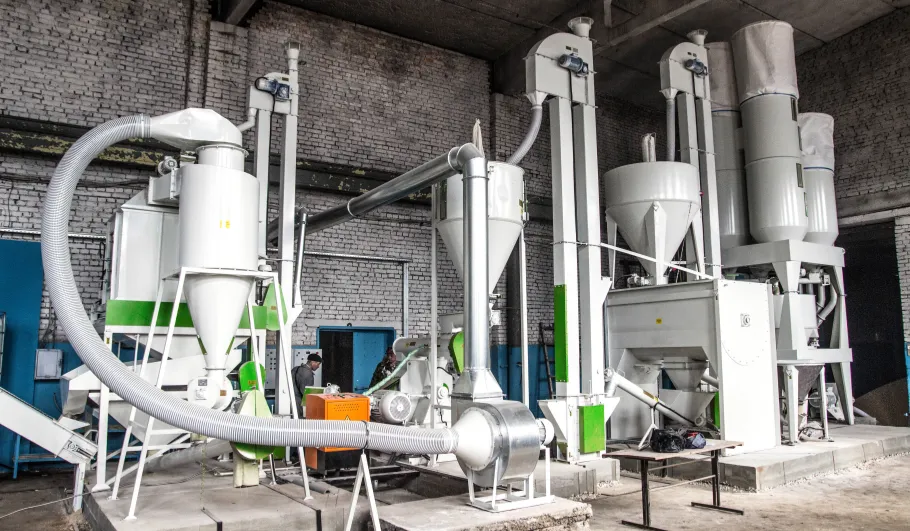
Start-up Aquafeed Plants
Newly built aquafeed plants typically have a production capacity of 1–3 T/H. Their equipment configurations are relatively more comprehensive, capable of producing aquafeed of a certain quality, including feed for common species and ornamental fish. This solution ensures reasonable investment costs while leaving room for future upgrades.
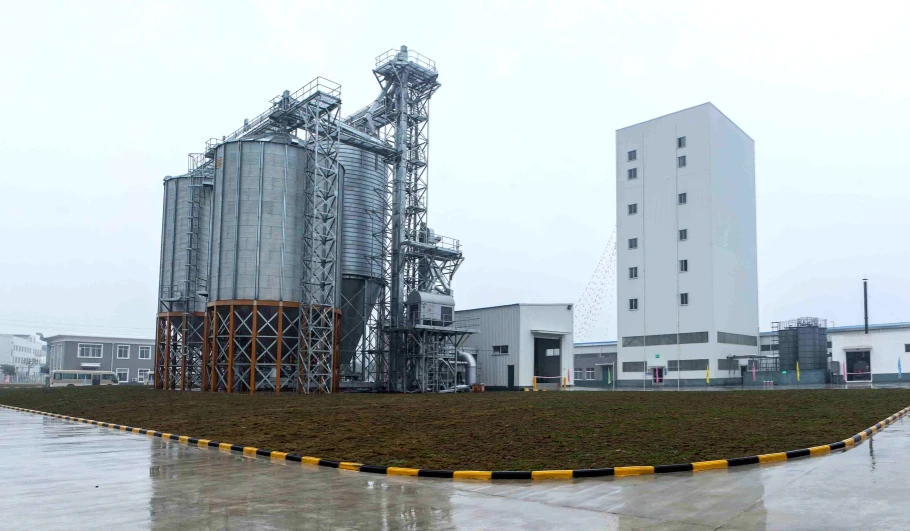
Medium-Scale Aquafeed Plants
This type of plant needs to supply different types of feed to multiple channels. Therefore, this solution features higher production capacity and a higher level of automation. Its production scale generally ranges from 4 to 8 T/H. In addition to basic varieties, it can produce premium, specialty, and high-protein, high-fat aquafeeds.
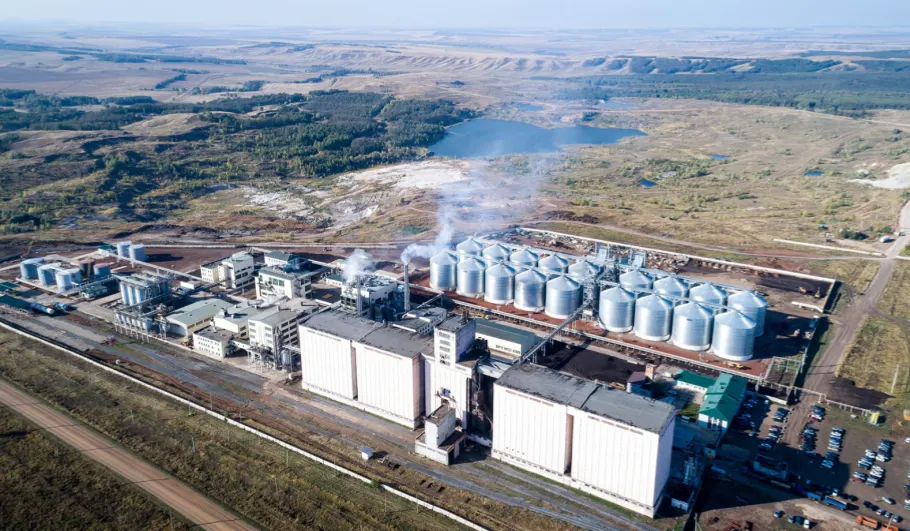
Large-Scale Aquafeed Plant
This solution is generally a customized solution or a turnkey project, with a production capacity ranging from 8–10 T/H and above. To adapt to large-scale industrial production, this solution features fully automated production. It enables 24-hour continuous operation while supporting a wide variety of feed categories, including premium and export-grade feeds.
Global Cases of Aqua Feed Production Lines
The following is an overview of actual projects related to this production solution, covering various scales and feed types. Our feed production equipment serves customers worldwide. We understand the local conditions and production needs in different parts of the world. Please feel free to share your production requirements with us.
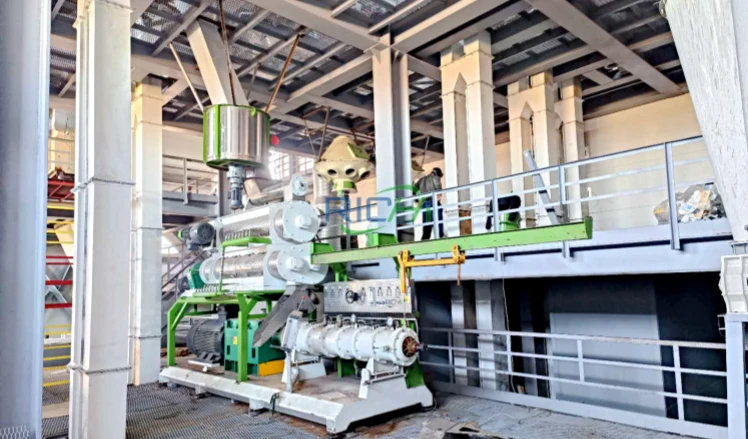
Iraq 5-6 T/H
Aqua Feed Production Line
Our client in Iraq is an aquatic feed factory requiring the production of high-quality floating fish feed, as well as other animal feeds. This solution incorporates an extrusion process capable of accommodating a variety of feed formulations to produce high-quality feed. It features a certain level of automation, which helps reduce labor costs.
Equipment Configuration: Batching system, Hammer Mill, ultra fine grinder, Twin-Shaft Paddle Mixer, twin-screw fish feed extruder, Mesh Belt Dryer machine, Oil Sprayer, Cooler, Packaging Machine, etc.
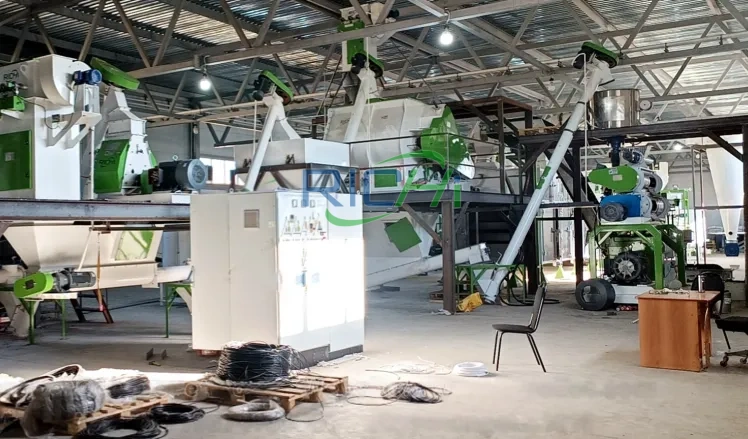
Russian 1.5-2 T/H
Aqua Feed Processing Line
This client is a start-up aquaculture feed plant requiring high-quality production capacity and a flexible production line layout. We provided a customized solution that includes a complete set of production equipment and an optimized layout. The sinking fish feed produced has received positive feedback from the client and has generated a substantial return on investment.
Equipment Configuration: Batching system, Hammer Mill, Twin-Shaft Paddle Mixer, twin-screw fish feed extruder, Mesh Belt Dryer machine, Oil Sprayer, Cooler, Packaging Machine, etc.
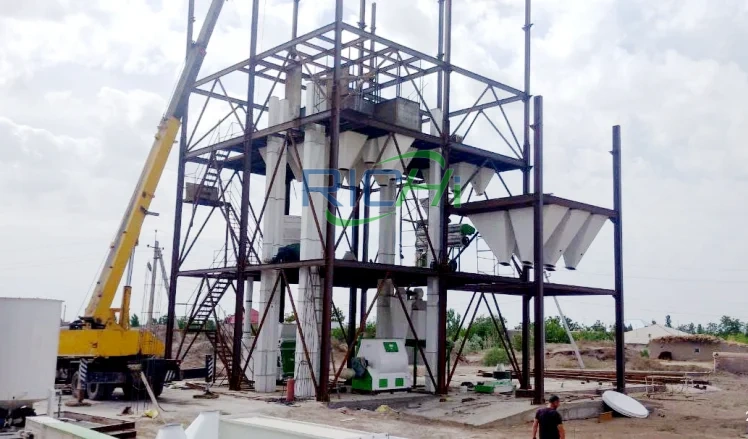
Algeria 10 T/H
Aquaculture Feed Production Line
This project was a turnkey solution, and we provided the client with one-stop plant construction services. It is an integrated production system comprising both an aquaculture feed line, as well as a livestock and poultry feed line. To enhance production efficiency, the solution is equipped with multiple silos. The feed produced meets both local market demands and export standards.
Equipment Configuration: Batching system, Hammer Mill, Twin-Shaft Paddle Mixer, twin-screw fish feed extruder, feed pellet machine, Mesh Belt Dryer machine, Oil Sprayer, Cooler, Packaging Machine, Storage silo, etc.

Indonesia 2-3 T/H
Aquatic Feed Production Line
This is a shrimp feed plant solution designed to produce shrimp feed in various formulations and specifications. The solution incorporates a pelletizing process. The shrimp feed pelletizer is equipped with a three-layer conditioner, which thoroughly gelatinizes raw materials to improve digestibility and absorption rates. We provide our clients with long-term technical guidance and rapid spare parts supply.
Equipment Configuration: Batching system, Hammer Mill, ultra fine grinder, Twin-Shaft Paddle Mixer, shrimp feed pellet machine, pellet Cooling machine, Packaging Machine, etc.


CUSTOMER REVIEWS
Our customers come from more than 140 countries and regions around the world, representing a wide range of production capacities and application needs. Below is customer feedback from various projects. Whether it’s a small-scale aqua feed production line or a large-scale aquaculture feed plant, we are able to provide ideal production services.

We operate a fish farm and require large quantities of tilapia feed. Previously, we had to continuously purchase feed, which was very costly. Now that we’re using RICHI fish feed production equipment, we can adjust the feed formula. This has significantly reduced our feed costs. It’s a very worthwhile investment.
Raw materials:
corn, soybean meal, fish meal, soybean oil, etc.
This shrimp feed production line can produce very high-quality feed, which is ideal for South American shrimp farming. We specifically chose twin-screw extruders and a coating system. These machines offer high production efficiency and stable operation, providing us with reliable performance.
Raw materials:
fish meal, shrimp meal, soybean meal, wheat flour, rice bran, etc.
With the assistance of RICHI engineers, we were able to design such a perfect production line. The fish feed it produces is of excellent quality and has been well-received by neighboring fish farms. Our equipment has now been operating smoothly for 3 years.
Raw materials:
oybean meal, wheat bran, yellow corn, fish meal, sunflower seed meal, etc.
Our production line is highly automated and capable of continuously producing fish and shrimp feed. Most notably, it allows us to adjust the proportions of various feed ingredients according to demand, enabling the production of a wide range of aquaculture feeds. This has significantly improved our return on investment.
Raw materials:
Rice bran, corn, peanut meal, fish meal, etc.
We established a catfish feed production plant for our group. This production line ensures a steady supply of feed for our aquaculture farms and has significantly reduced our day-to-day procurement costs. We are grateful to the RICHI team for their attentive service and reliable support.
Raw materials:
Corn, cassava flour, soybean meal, fish meal, palm oil, etc.

Click to chat with us online
ABOUT RICHI MACHINERY
30
RICHl Machinery
has over 30 years of manufacturing experience
With our extensive experience in customer service, we can provide you with advanced and efficient production solutions. We not only provide aqua feed production line, but also other animal feed equipment, biomass equipment, organic fertilizer equipment, cat litter equipment, and more. We offer customization services and turnkey solutions for all of these.
140
Our services cover more than 140 countries and regions.
International
Certification
We have obtained several major international certifications.
2000
The number of global projects has exceeded 2,000.
60000
Total factory floor space exceeds 60,000 square meters.
Every feed plant has different raw materials, facilities, and budgets. RICHI offers fully customized services—from design to after-sales support—to ensure that you receive not just a machine, but a production solution tailored to your specific needs.
Customized Solutions
Our engineers provide exclusive design solutions, precise capacity calculations, and detailed cost estimates. We tailor equipment to your specific needs based on raw materials, production capacity, and project objectives.
Complete Turnkey Project
A one-stop solution covering factory layout planning, on-site construction, export customs clearance, end-to-end logistics, safe delivery, equipment installation, commissioning, operator training, and after-sales service.
After-Sales Support
We offer a one-year warranty on the machines, genuine spare parts, technical guidance, and lifetime equipment upgrades and maintenance. RICHI’s experienced engineers ensure your long-term, stable production.
Frequently Asked Questions
Below are answers to questions regarding the aqua feed processing line solution. We can provide consulting services regarding production capacity options or equipment configurations for this solution. Please feel free to contact us at any time.
Can a single aqua feed production line produce multiple types of aquaculture feed?
+
Our production line solutions are scientifically designed to meet the feed requirements for fish, shrimp, crabs, and specialty aquatic species. For diverse feed needs, we recommend configuring a twin-screw extruder.
This equipment can accommodate a wide range of complex feed formulations and efficiently produce high-quality pellets, including floating feed, sinking feed, and slow-sinking aquatic feed. By changing the die size, pellets of different sizes can be produced to suit the feeding habits of various aquatic species.
What raw materials can this aqua feed pellet line process?
+
As an industrial solution, this production line can process a wide variety of raw materials. These include common grains such as corn, wheat, soybean meal, rice bran, peanut meal, and rapeseed meal, as well as nutritional ingredients like fish meal, shrimp meal, squid meal, fish oil, and vitamins.
These raw materials undergo high-performance grinding, mixing, extrusion, or pelletizing to produce high-quality feed pellets with uniform nutritional content. They are then dried, oil-sprayed, cooled, and screened to meet high-standard market requirements.
What aquaculture feed equipment is essential?
+
Basic aquaculture feed production requires raw material receiving equipment, mixers, extruders or pelletizers, coolers, and screeners. These meet the needs of basic feed production and are commonly used in aquaculture farm setups.
For high-quality feed production, additional equipment such as dryers, liquid sprayers, bagging scales, conveyors, and electrical control cabinets is typically required. High-capacity production solutions generally also require grain storage silos to ensure seamless production flow and improve efficiency. These components can be flexibly configured based on actual production needs.
How to select the appropriate production capacity for an aqua feed production line?
+
Selecting the appropriate production capacity is crucial for investing in an aqua feed pellet line. You need to comprehensively consider sales demand, raw material supply, daily production capacity, and budget constraints.
For aquaculturists with self-consumption needs, small-capacity solutions ranging from 0.2 to 1 T/H are generally chosen. Start-up feed mills typically opt for 2–3 T/H, while large-scale feed mills tend to target capacities of 5–6 T/H or higher.

