
 +86 14769960951
Fish Feed Mill Plant Cost
The fish feed mill plant cost ranges from approximately $60,000 to $1,200,000 and above. This quote covers all equipment prices, excluding other customized services. To meet diverse production capacity requirements, we offer production line solutions ranging from 0.2 to 20 T/H and beyond. These lines can produce sinking fish feed, extruded feed, shrimp feed, and various specialized aquatic feeds. We also provide customized solutions and turnkey services.
Fish Feed Mill Plant Cost by Capacity
The construction cost of this feed mill depends primarily on its production capacity. Equipment configurations and automation levels vary significantly at different scales. It is also worth noting that submerged fish feed costs are substantially lower than floating feed for the same production capacity. Our fish feed mill solutions offer a range of capacities and automation levels, so you can choose the option that best suits your needs.
Design
0.2-1 T/H Fish Feed Production Line Price
This solution suits small-scale fish feed plants, fish ponds, and startups. Its equipment configuration is relatively simple with lower investment costs. The reference price range is $60,000–$200,000. Prices vary significantly based on different equipment configurations.
Design
2–5 T/H Fish Feed Pellet Plant Price
This is typically a turnkey solution suitable for small to medium-sized feed mills and large aquaculture bases. The production line system features more comprehensive configurations and offers a higher return on investment. The reference price is $60,000–$670,000.
Design
10 T/H+ Aquatic Feed pellet plant cost
This scale caters to large feed enterprises and industrial projects. Its comprehensive capabilities enable production of multiple aquatic feed types. Typically equipped with advanced PLC systems and high-capacity machinery, investment ranges from $170,000 to $1,200,000 USD and above.
Factors Affecting Fish Feed mill plant cost
Beyond production capacity, numerous factors impact the costs of fish feed manufacturing plants. For instance, production solutions for different types of fish feed exhibit significant price variations. The types of raw materials used also influence the configuration of production stages. Considering the following factors comprehensively will better enable you to develop a reasonable and feasible investment plan.
√
Fish Feed Types
Common types of fish feed include sinking feed, floating feed, and other specialized varieties. It is important to note that the production line for floating fish feed carries a higher price tag than that for sinking feed. This is because extruded fish feed production demands more sophisticated equipment, requiring the integration of dryers and oil spraying systems. In contrast, the configuration for standard sinking feed solutions is relatively straightforward.
For example, a single-screw floating fish feed production line has a capacity of 0.2-1 T/H, with a reference price of $60,000-$170,000 USD. A twin-screw floating fish feed production line can accommodate capacities ranging from 0.5-10 T/H and above, with prices reaching $150,000-$1,200,000 USD and higher.
√
Automation Levels
We offer two production line solutions with varying automation levels. The automated line is suitable for medium-scale and larger fish feed production. While it carries a higher price point, it delivers greater production efficiency and reduces labor costs. The disconnection line requires lower investment and is better suited for small-scale fish feed plants.
√
Raw Material Types
Common raw materials for fish feed production include fish meal, soybean meal, corn, and wheat. Processing these materials is relatively straightforward and does not require extensive process configuration. However, for raw materials requiring grinding and drying, additional raw material processing systems must be installed. This consequently increases investment costs.
√
Factory Construction Costs
For comprehensive plant construction solutions, these costs also encompass factory building and construction expenses. Our turnkey production solutions address precisely this need. They provide a full service process from feed mill planning to production, significantly saving your time and labor costs. Additionally, for production line solutions, we offer equipment installation and commissioning, along with training services. You can choose with confidence.
How to Quickly Establish a fish feed Plant?
If you want to speed up your plant construction and start producing quickly and easily, this turnkey solution is the ideal choice for you. It offers comprehensive planning and facility construction for feed mills, significantly reducing the time you need to invest. We also offer reasonable fish feed mill plant cost and specialized services for production line projects, which includes equipment customization, operational training and long-term technical support, to ensure your sustained production capabilities.

Free Consultation
Our dedicated pre-sales team offers round-the-clock complimentary project consultation services.
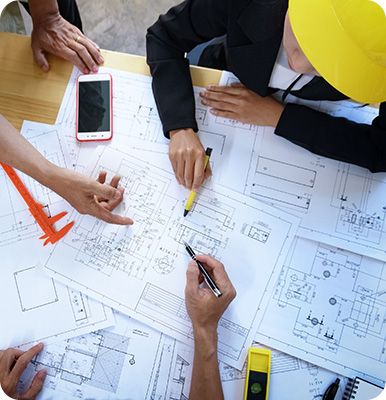
Exclusive Customization
Our experienced engineering team offers bespoke equipment customization and project planning.
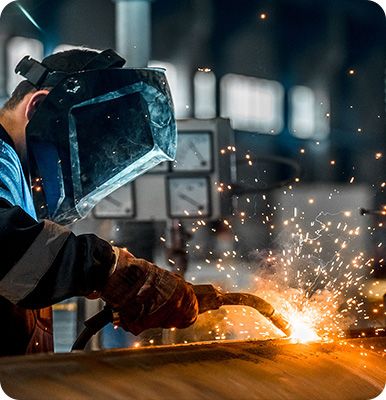
Equipment Manufacturing
We operate an independent large-scale factory capable of manufacturing equipment for diverse feed needs.
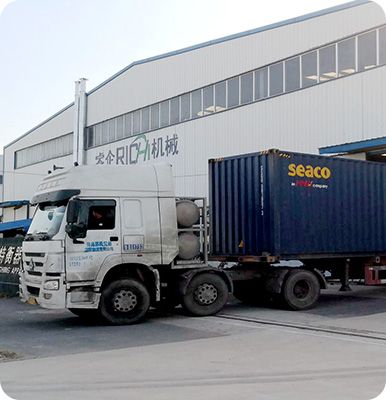
Rapid Shipping
Our global logistics system enables factory-direct shipping, accelerating delivery by 50%.
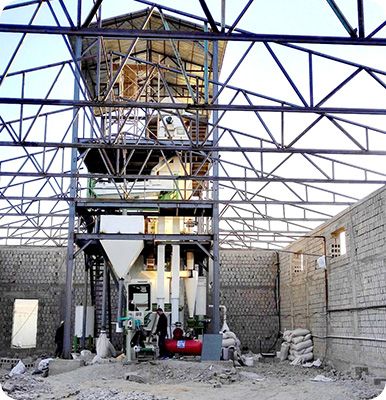
Project Implementation
We provide comprehensive services including equipment installation, commissioning, and operator training.
Trial Operation
Completed production lines undergo rigorous multi-round operational testing to ensure optimal performance.
Factors Affecting Return on Investment
The payback period for a fish feed mill is not fixed and depends on subsequent operational performance. Therefore, in addition to the initial fish feed mill plant cost, you must also consider ongoing production expenses, raw material costs, and sales channels. Taking all these factors into account facilitates the development of a long-term production plan.
- Product Sales: Stable sales channels and operations are key to feed mills achieving a return on investment. All production investments can yield returns through effective operations. Before investing, you must evaluate sales channels. This ensures the investment plan delivers its intended return on investment.
- Equipment Maintenance: Our equipment is constructed using high-strength, wear-resistant materials, significantly reducing wear rates. Additionally, ensuring regular and effective equipment maintenance further minimizes wear and extends its service life.
- Production Costs: The primary production costs for fish feed factories include raw material costs, labor costs, and energy consumption. It is worth noting that our equipment features highly efficient, energy-saving designs that significantly enhance raw material utilization. Consequently, this solution reduces energy consumption by 20% while increasing unit output by 15%.
- Regarding labor costs, you can opt for highly automated production lines to reduce expenses. While automated lines require higher upfront investment, they offer greater production flexibility. In the long run, they save more on production costs and deliver a higher return on investment.
Frequently Asked Questions
Our solutions for fish feed mill plants do not have fixed pricing standards. This is primarily because clients’ requirements vary, necessitating different configuration options. Therefore, we have compiled potential questions you may have, including solution selection, applicable scenarios, differences between production lines, and more. To obtain an accurate quote for fish feed mill plant cost, please provide your specific production requirements.
+
What equipment is required for small-scale fish feed production?
Small-scale fish feed production lines do not demand high levels of automation and typically only require basic processing stages. These include raw material grinding, mixing, pelletizers or extruders, cooling and screening, and packaging. Notably, there is a significant price difference between floating feed extruders and sinking feed pelletizers. Additionally, drying stages and spray systems must be configured.
+
Why is the floating fish feed mill plant cost higher?
This is primarily due to differences in the production process. Compared to sinking fish feed, extruded feed requires specialized extruders. These machines apply high temperature and pressure to enhance the feed’s buoyancy. Additionally, drying and oil-spraying systems further improve the feed’s palatability and optimize feeding efficiency. While these optimized equipment and processes elevate feed quality, they also increase investment costs.
+
What are the differences between a fish feed pellet making machine and a floating fish feed extruder machine?
The most obvious distinction lies in their intended applications. Fish feed pelletizers are used to produce sinking fish feed, while extruders are designed for manufacturing floating fish feed. Floating fish feed production demands higher specifications, resulting in significant differences in equipment configuration.
Extruders come in single-screw and twin-screw types, which expand feed through high temperature and pressure. Fish feed pellet machines are typically equipped with a three-layer conditioner to better gelatinize materials and enhance their water resistance. Determining the type of feed production helps in selecting the correct equipment.
The other is the price difference. Floating fish feed extruders come in two models. A single-screw floating fish feed machine price ranges from $19,900 to $46,460 USD. The twin-screw model costs $77,300-$197,790 USD. Meanwhile, a single fish feed pellet machine price falls between $7,500-$80,500 USD.